
The Weazel normally stays in the woods where he belongs, but once in a while even a rusticated misanthrope needs to go to town for supplies, and to see those big city lights. After our wonderful sojourn in Torotoro, land of dinosaurs, Dr. Ann and I decided to head for the nearest big city, but where might that be?
Sucre, the official capital of Bolivia, is only 73 miles to the south of Torotoro as the crow flies, but not as the condor flies, for condors fly in circles.
There didn’t appear to be any roads going in that direction, but we had heard that for an exorbitant fee a rugged 4×4 truck would make the journey over hill and dale. By that I mean on barely traversable dirt roads over a series of 10,000 foot mountain passes, hence the cost. None of our fellow travelers were willing to split the bill, so we reluctantly decided to return to Cochabamba by minibus, then find our way to Sucre from there.
The trip was uneventful until the driver decided to veer off the main road into the vast agricultural valley surrounding the small town of Cliza. The soil, like that in the adjacent Cochabamba valley, is incredibly rich. Every square inch of available land was cultivated, yet the inhabitants appeared to be universally impoverished. It is bad enough that the so called “resource curse” affects communities dependent upon extractive industries like mining, but these were yeoman farmers using sustainable methods to feed the nation. Why must it always be so?
There were signs of discontent, most notably effigies, presumably of politicians, crooks, and other bad people, hanging from bridges and lamp posts. These were put up as a warning by neighborhood vigilante groups. I was unable to get any good photos, so I searched the web and found the following photo. It was taken from an interesting blog which you may wish to visit: Notes from Camelid Country.
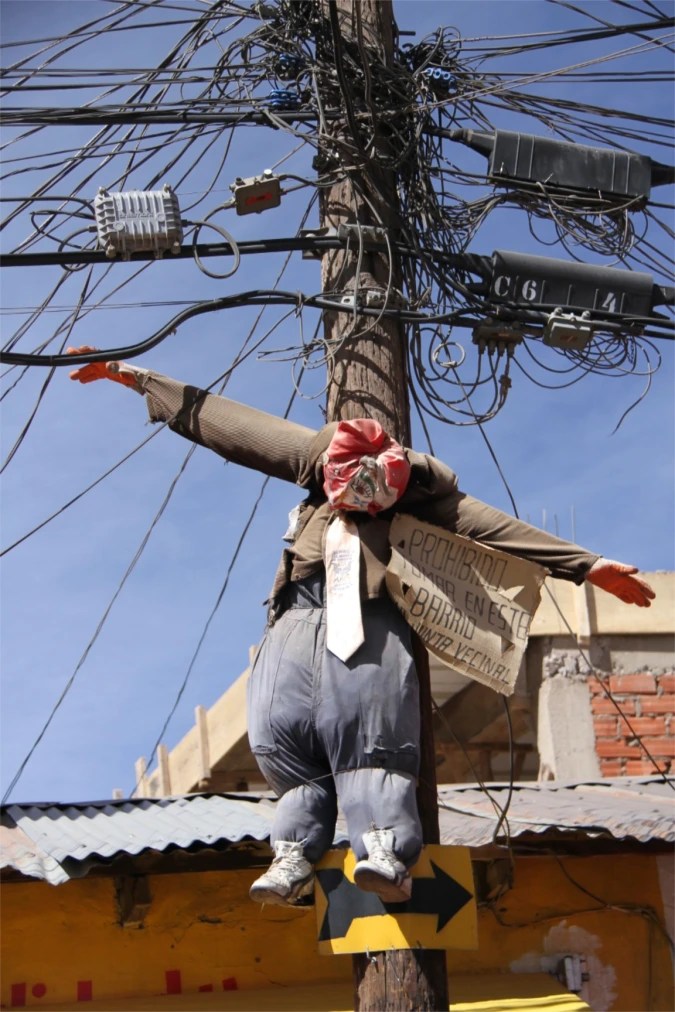
We in the so called civilized West profess to abhor vigilante justice, but we do so from the safety of our own suburban sanctums. In the real world things are often different.
Wherever civil institutions are ineffective it is reasonable to suppose that vigilantism will arise. This can be due to chaos in the aftermath of war, corrupt or inefficient policing, or widely perceived threats to social order.
There is no question but that enraged mobs throughout history have perpetrated grave injustices. Who, other than an Islamic fanatic, would not condemn the murderous mobs in Pakistan which, on the basis of a rumor, tear apart those accused of blasphemy?
Other examples are more morally ambiguous. Here in the United States we love to hate the excesses of the KKK which, in the minds of its participants, arose primarily to defend the honor of white women against the perceived sexual depredations of impoverished blacks. Such unions may be considered acceptable today, but this is now and that was then.
What about the lynching of Joseph Smith, the polygamist founder of the Mormon cult? He led an insurrectionist army, abducted dozens of young women, and believed himself to be a God on earth immune from civil law. The citizens of Carthage Illinois were convinced that the authorities might release him, so they stormed the jail and shot him. I would have done the same, and the fact that the perpetrators were exonerated proves that the sentiment was widespread.
In the United States today there is a movement to ignore or downplay the crimes of black people because they are presumed to be “oppressed”. The inevitable consequence has been a rise in gun sales and militia groups.
The situation is somewhat different in Latin America where indigenous groups such as the Zapatistas have arisen to combat both corrupt politicians and drug cartels. In places like Michoacan peasant mobs are the last recourse for those seeking justice. Bolivia is not Mexico, but the citizen groups that hang effigies want to make sure that Bolivia never becomes like Mexico.
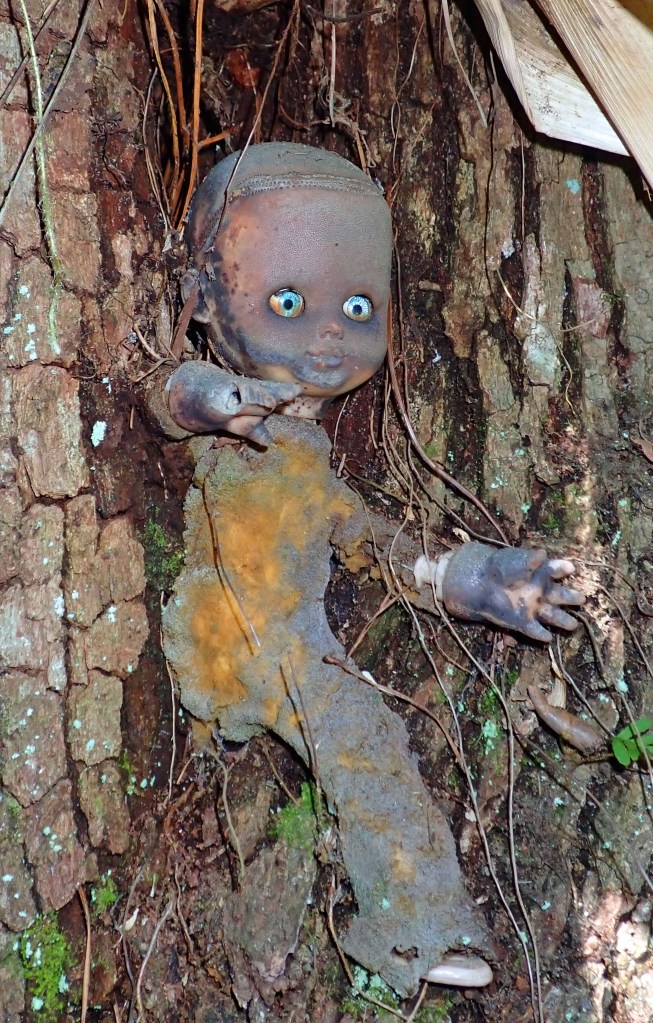
I even have effigies of my own. Everyone who visits me notices that I have strategically placed mutilated baby dolls as art. These were placed with humorous intent, but they also convey a more sinister message, “You are deep in the woods, and far from any law. The man who lives here is a potentially dangerous maniac who will not hesitate to chop off your head, so be on your best behavior!” So far it has worked, and Weazelworld remains a haven of peace and tranquility!
After returning to Cochabamba we had yet another wretched meal of overcooked shoe leather with undercooked French fries. How can it be that in Bolivia, original home of the potato, every single restaurant serves greasy French fries and nothing else? From the size of the fries I concluded that the potatoes were imported from Idaho. A travesty!
In the morning we set out for Sucre in the first available trufi (minibus). I bartered my way into the front seat. (Note to fellow travelers: Do whatever is necessary to get the front seat. That way you can enjoy the scenery, and will die quickly when the inevitable accident comes. If you ride in the back you will be slowly suffocated by the weight of the other passengers when the bus winds up upside down in a ravine.)
I previously noted that the geological formation that produced the marvels of Torotoro extended all the way south to Sucre, which is at a comparable elevation of about 9000 feet. As we were entering town we passed a large limestone quarry. The mining had exposed a vertical slab more than 300 feet tall, and in that slab I could clearly see enormous dinosaur tracks!

In the upper left corner of the image above you see the tracks of two Sauropods which trundled along side by side some 68 million years ago. The tracks were so big that I could see them from a speeding bus more than a quarter of a mile away!
After passing the quarry there were dinosaur sculptures alongside the roadside which culminated at the Parque Cretácico where a life sized model of a Sauropod dwarfed onlookers.

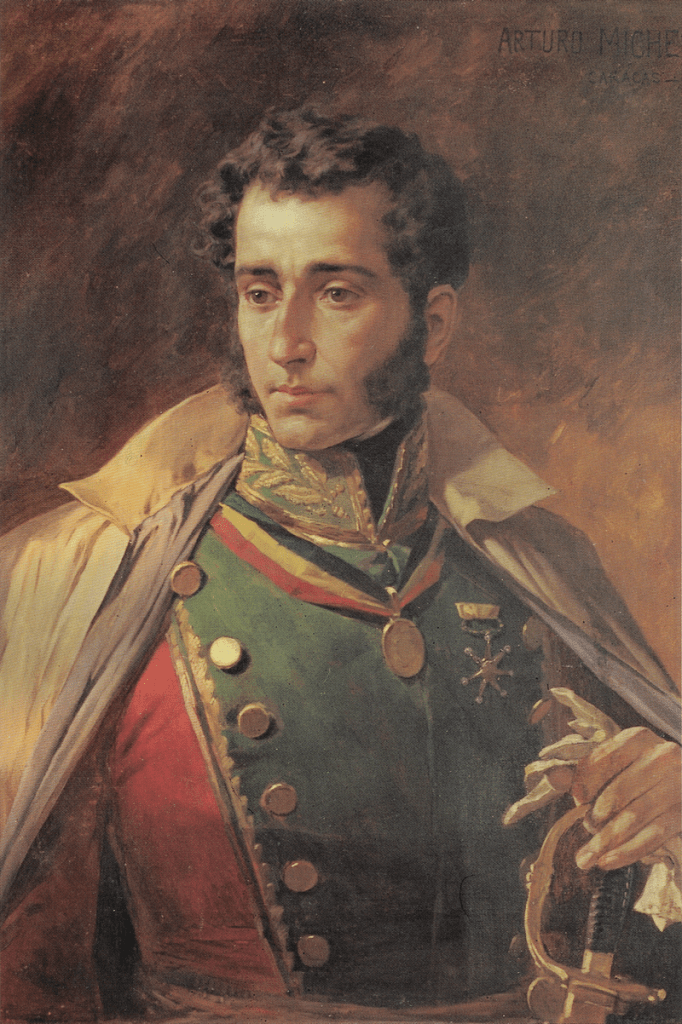
Sucre, now known as the White city, was not named for its sweetness, but rather for Antonio José de Sucre, a hero of the Bolivian revolution and friend of Simón Bolívar. The name is a recent honorific dating from only 1839, but the city is much older than that.
The town now known as Sucre was founded in 1538, a mere 46 years after Columbus “discovered” the new world. How could the conquistadors have reached such a remote location in so short a time? Easy! They were motivated by greed. They had already seen and stolen the gold and silver ornaments of the Inca elite. All it took was torture to force them to reveal the source of their riches.
So it was that the conquistadors discovered Cerro de Potosí, an enormous mountain that is quite literally made of silver ore (40% pure!). The immediate result was the creation of a boomtown which enabled Spain to become the richest country in the world. There were a few Spanish overlords, but the actual work was performed by countless enslaved Indians who were physiologically adapted to high altitudes.
How high? The city of Potosí, which sits at the base of the mountain, is located at 13,420 feet, which makes it one of the highest cities in the world. The peak of Cerro de Potosí is a towering 15,827 feet tall. That means the poor enslaved Indians had to trudge up to 2000 feet uphill every day just to go to work in the freezing cold. At that altitude people from the lowlands would normally just fall over dead, but the Indians were tough!
The aristocratic Spanish families who owned the mines had no desire to breathe such thin air, so they found a better place only fifty miles away as the crow, but not the condor, flies. Thus was founded Sucre, then known as Ciudad de la Plata de la Nueva Toledo (City of Silver of New Toledo). At a mere 9000 feet it was balmy by comparison to Potosí.
…………………………………………
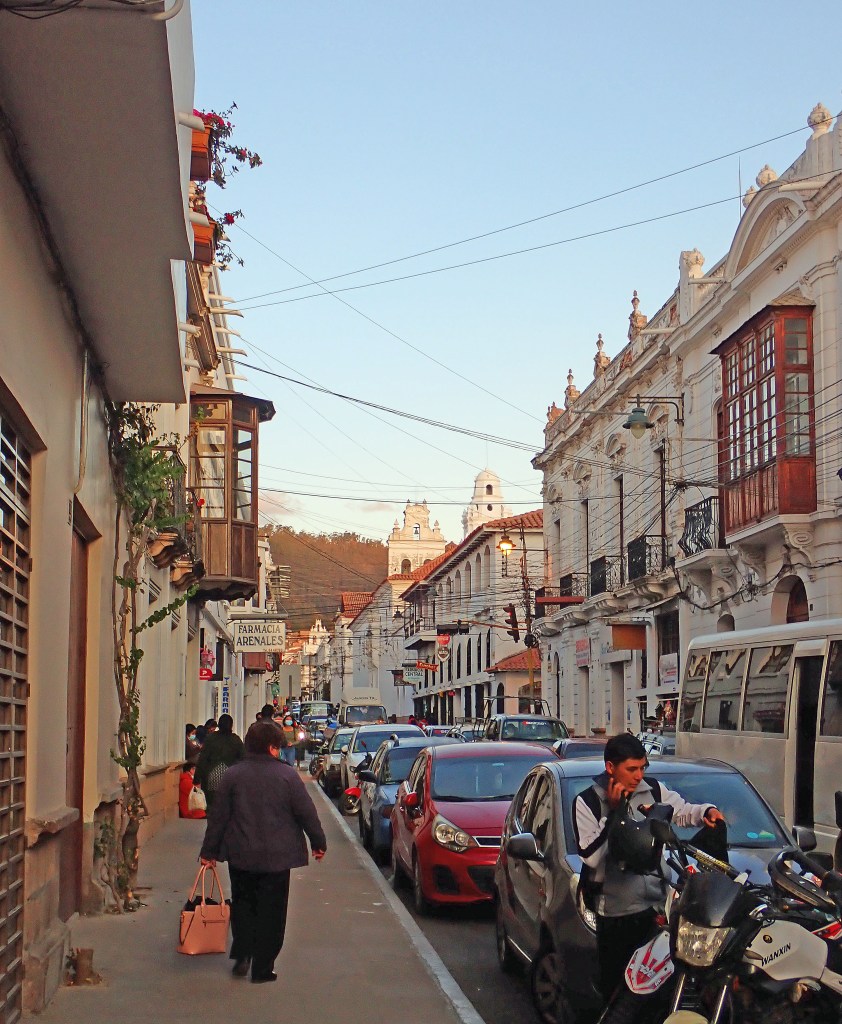
The narrow streets of old Sucre were lined with magnificent colonial architecture, much of which was white. Everything was well maintained and clean.

Our hotel, though modest, was comfortable, and featured both an atrium and a roof terrace with an expansive view.

We set out in search of dinner. As we walked we were much impressed by the vibrancy of the city. Streets packed with well dressed people going places is the surest sign of a viable economy. I was astounded to see that many of the men wore business suits, the first I had seen in Bolivia. Everyone was polite. It was clear that we had returned to civilization!
After dinner Ann retired to our room for she was feeling ill, perhaps from Covid. We had just left Cochabamba which was the current epicenter of the outbreak. Everyone everywhere was sniffling, hacking, and drooling, but few people wore masks, so there was nothing that could be done about it other than to wait for herd immunity to set in. I felt fine, so shortly before sunset I wandered the streets in search of a drink.
As previously mentioned, the concept of a bar, i.e., a place where strangers gather to drink and converse, is not part of Bolivian culture. Every tienda has beer for sale, as does every restaurant, but spirits are rarely for sale anywhere except in bodegas dedicated to that purpose, and in expensive hotels catering to foreigners. It is perfectly acceptable for a gentleman (By which I mean a white aristocrat) to imbibe in private with his close friends, but the drinking of any sort of hard liquor by an Indian is a disgrace. As is true with indigenous people throughout Latin America, anyone who consumes alcohol does so for the sole purpose of falling face down in the street. In other words, only bums drink.
So, I wandered the streets in vain until I noticed an old church that featured a bell tower. A hand lettered sign said, “cafe inside”. To my delight I discovered that it was the closest thing to a bar to be found in Sucre.
A friendly bartender at the base of the tower handed me a cold beer then invited me to go upstairs. The tower was about a hundred feet tall, 18 feet square at the base, and windowless except at the top. A steep staircase circled up the inside walls to a series of landings, each of which had been artfully transformed into a uniquely themed space. Some had tables and chairs whereas others did not and were reserved for dancing.
I was dismayed to discover that I still hadn’t fully acclimated to the altitude. Ascending the steep stairs caused me to huff, puff, and pause while waitresses carrying platters full of beer breezed past me as though I was standing still.
Each landing featured a different sort of art. I was disinterested in the space featuring modern art, but the other spaces were filled with beautiful classical paintings and iconography.
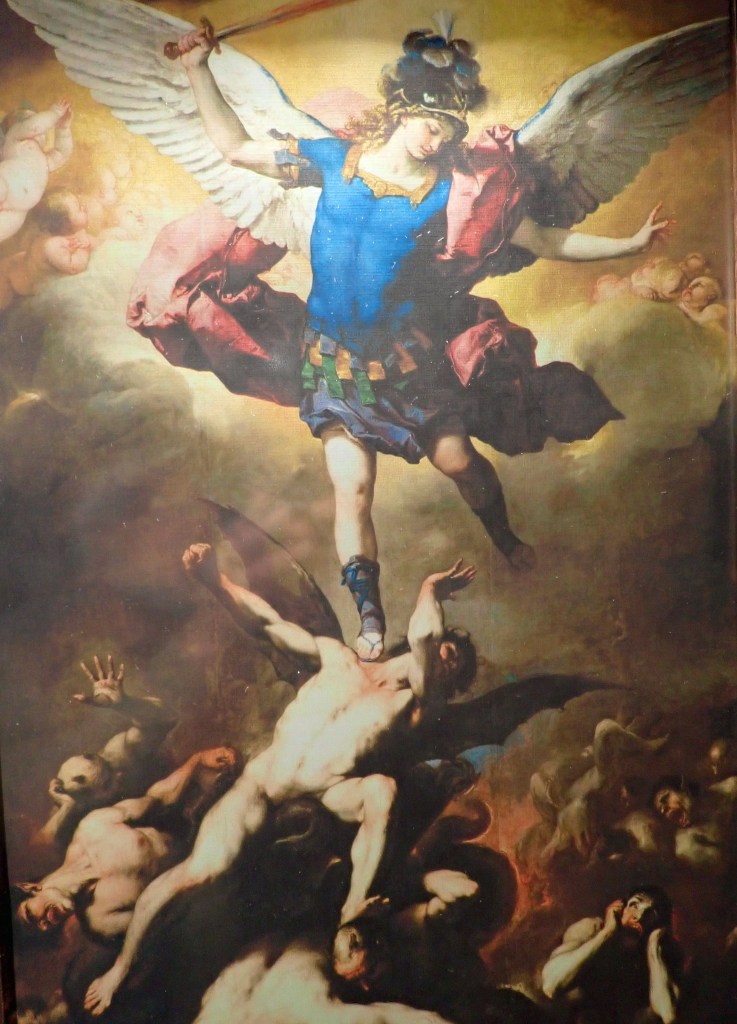
Above, we see a transgendered angel named Gabriella (Preferred pronouns: she…it) smiting the sexless Palestinians sinners. They were thus smitten because Yahweh in his infinite wisdom realized that future generations of Palestinians would use their rodent like fecundity to overpopulate the promised land. Not bad for bar art, eh?
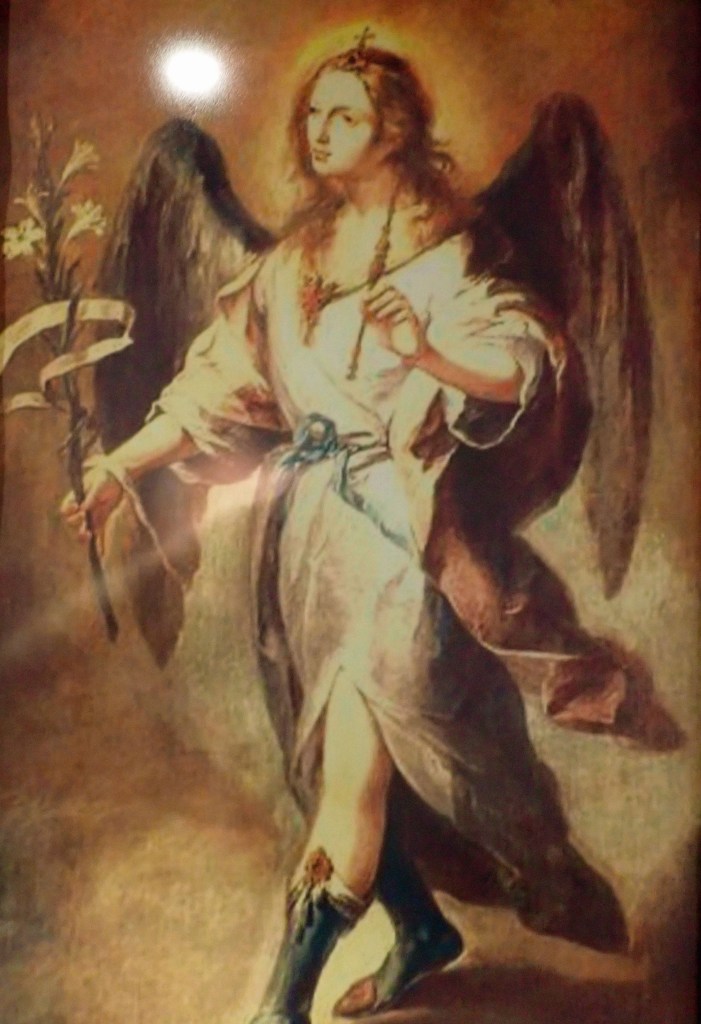
After the battle Gabby freshened up with a dab of jism, I mean chrism, behind her…its ear, then put on her…its best dress to join the heavenly host upstairs for a beer.
You know you are in Heaven when you can stand on thin air to look straight down upon the hapless sinners far below.
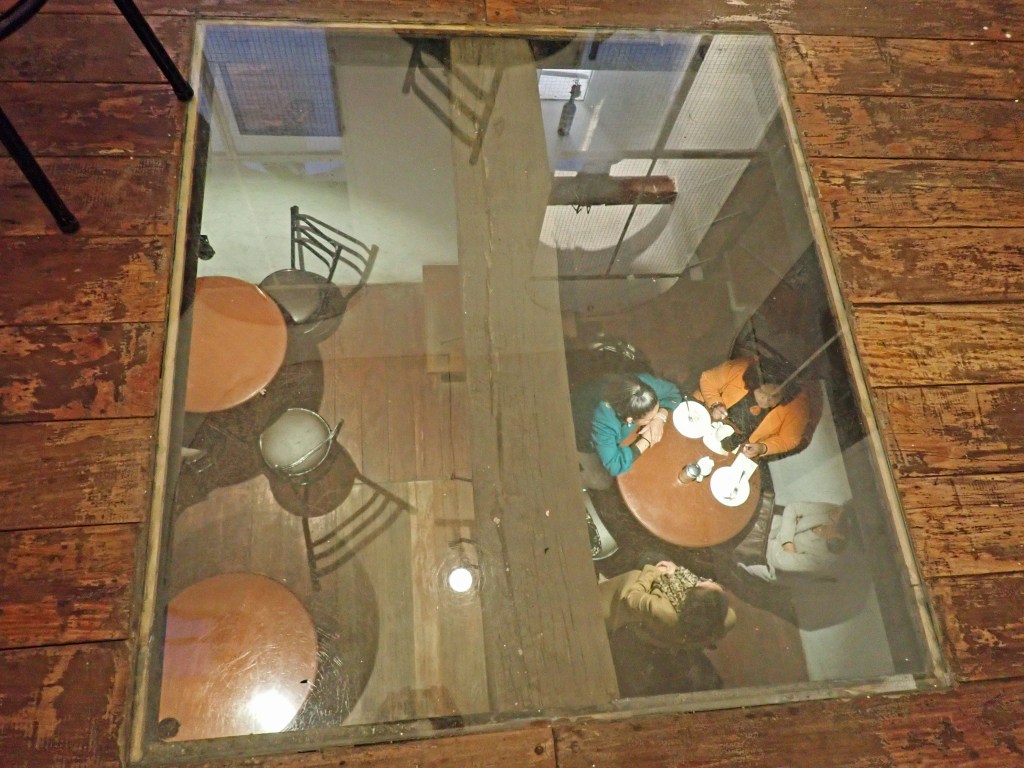
But how to summon the Heavenly Host for happy hour? It’s easy if you’ve got one of these.
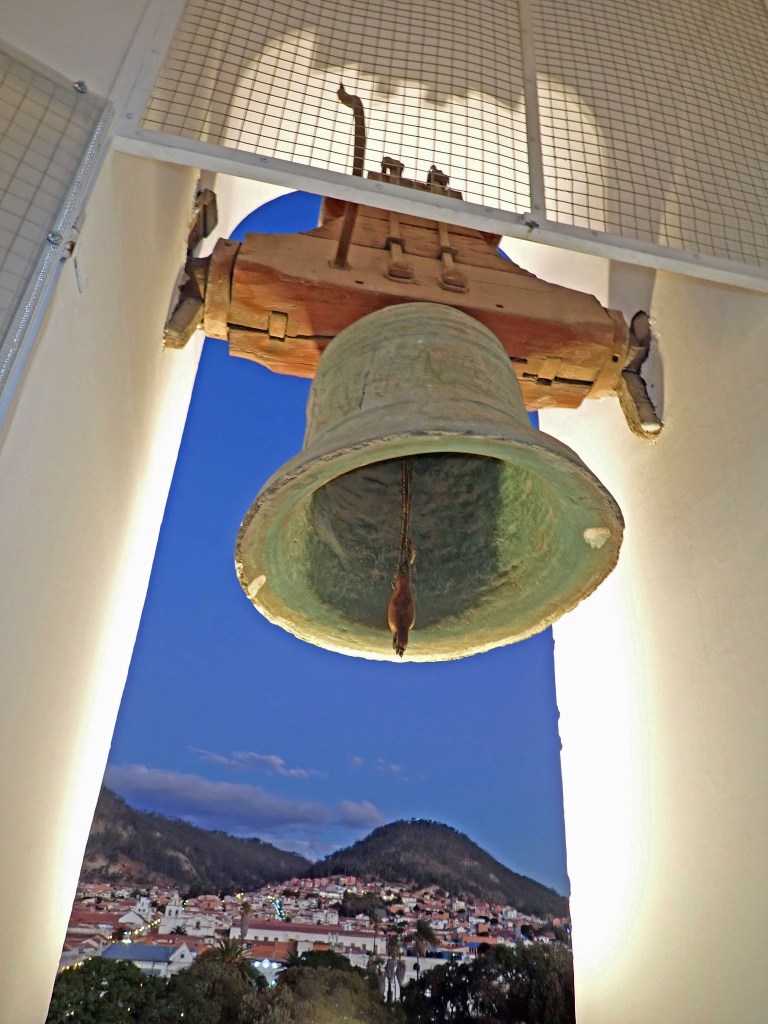
There were eight of these wonderful bells, and each one weighed at least a ton. Each was attached in a different and inadequate manner. The bell below was cast in 1779, and has been held up ever since by rotting leather thongs.
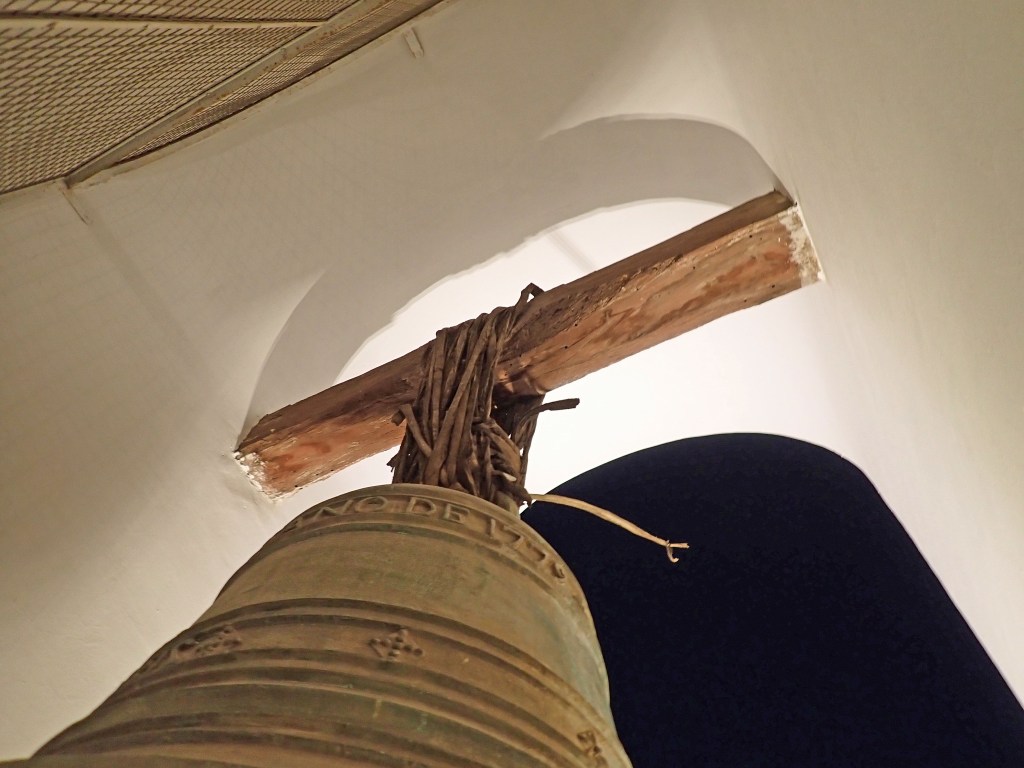
What a bountiful harvest for the Lord there will be when the bell comes crashing down like a meteorite onto the heads of the faithful!
The sunset views were sublime.
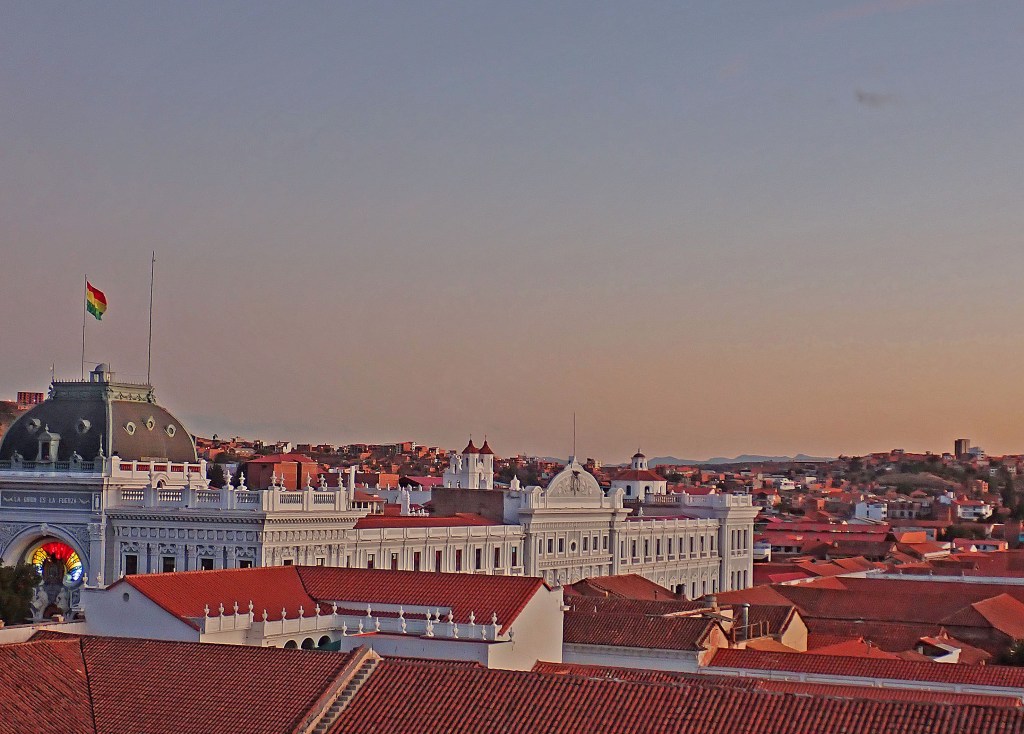
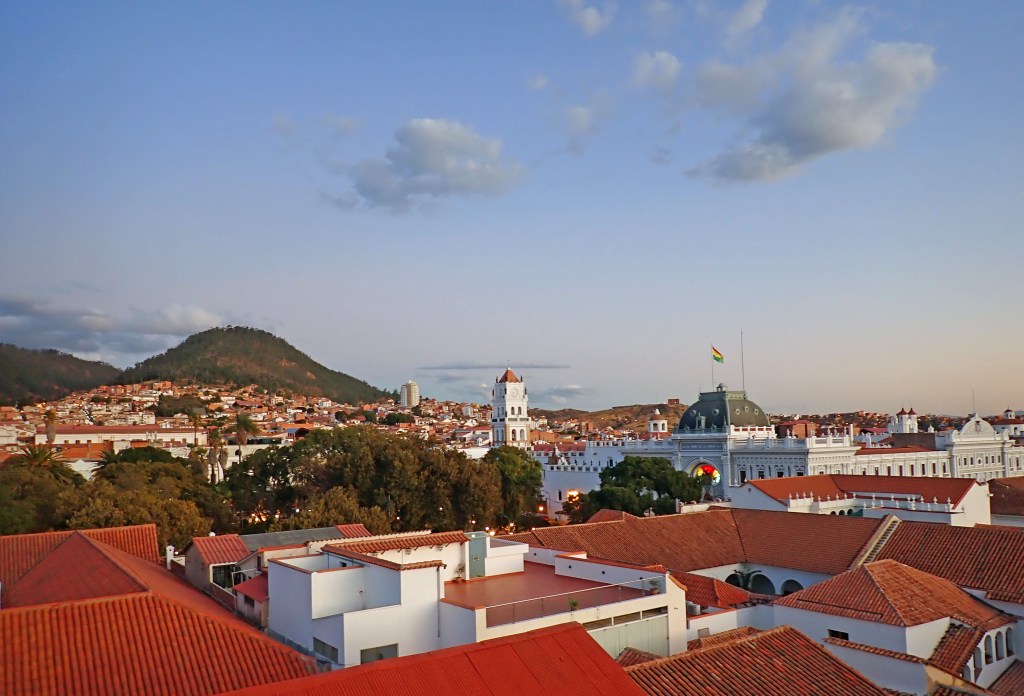
The following day I set out to explore the town and it’s magnificent colonial architecture.
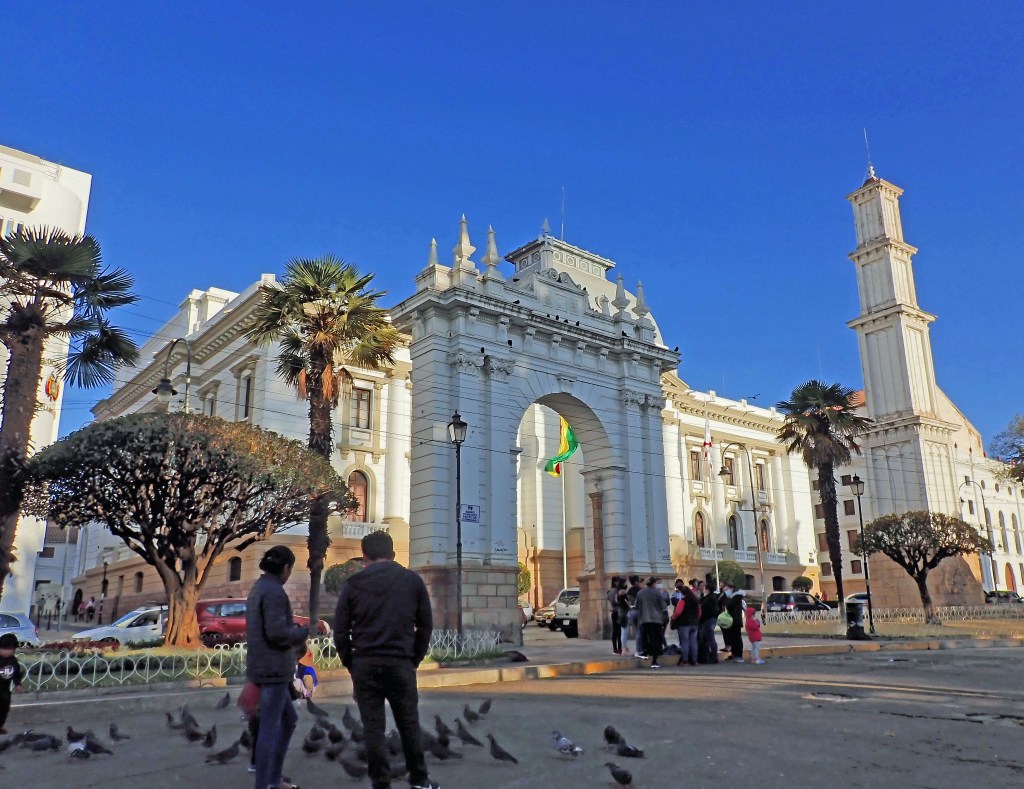
Among other wonders, a replica of the Arc de Triomphe in Paris stands in front of the Bolivian supreme court. Sucre may be the capital of Bolivia, but most government offices are located in La Paz, so, for most Bolivians Sucre is an unimportant place which slumbers in sublime oblivion.
Best of all was the magnificent Simón Bolívar park which fronts the triumphal arch and extends for four long blocks. Among other marvels, it includes a mini tower similar to the Eiffel tower that was designed by no other than Gustave Eiffel himself. At the far end of the park there is a lovely rose garden and fountain.
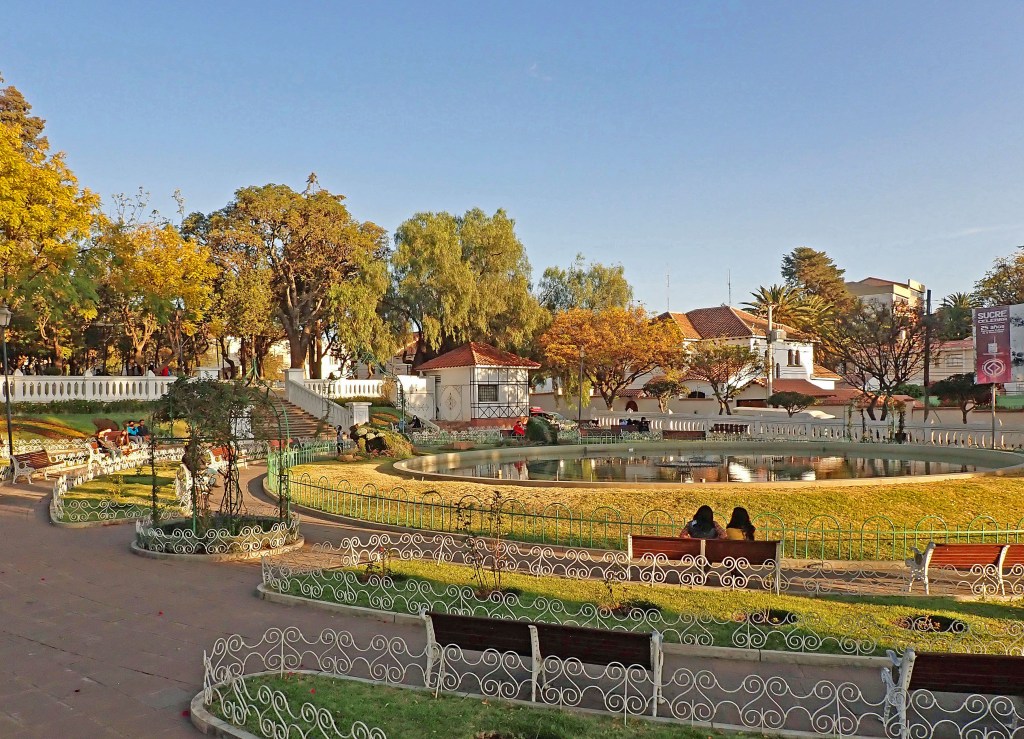
The park was created in the late eighteenth century through the largess of an extraordinary woman named Clotilde Urioste de Argandoña.
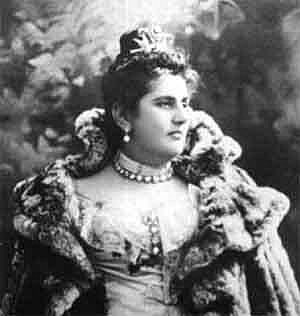
Tilly wasn’t just a rich lady in a fur coat. In 1898 she and her hubby Francisco Argandoña Revilla were made Prince and Princess of la Glorieta by Pope Leo XIII. Their fabulous wealth came from silver (Where else would it come from?). It also helps to know people like the Pope. In addition to creating the most glorious park in Bolivia, they built the Glorieta castle on the outskirts of town. It is said to be a wonder to behold, with architectural elements of other castles from around the world. Had I known of it at the time I would surely have paid a visit.
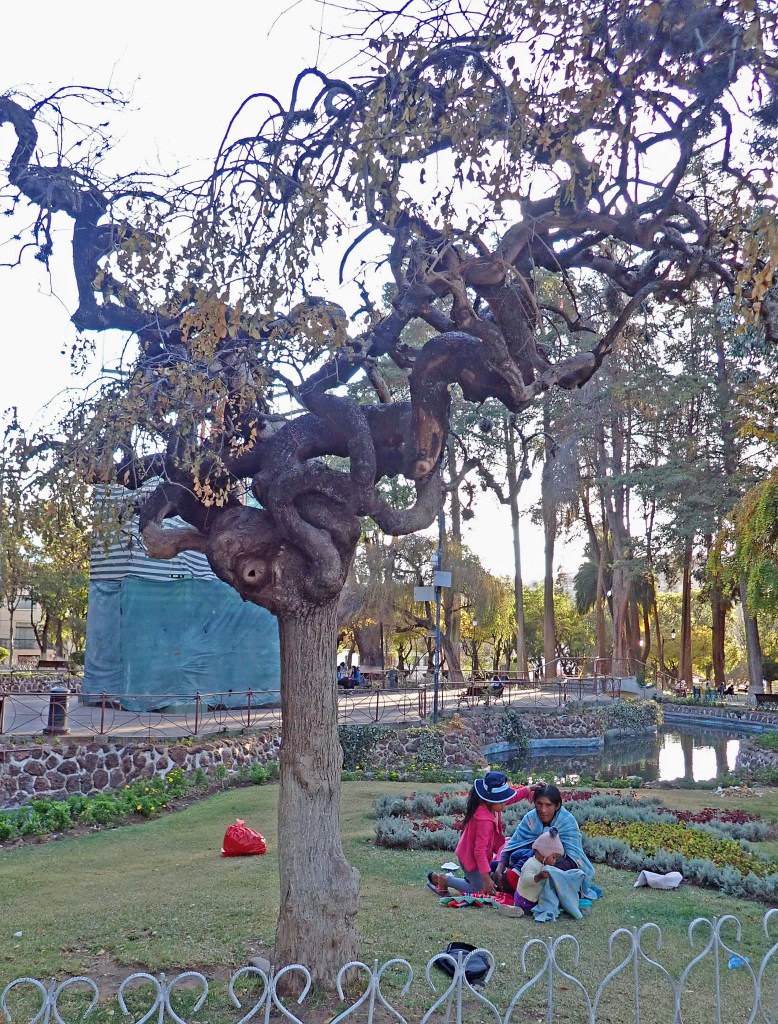
I was astounded by the size of the trees, towering specimens of various beautiful species from around the world. There were gigantic true cypress, Lebanese cedars, Scotch pines, and many others, all of which were many times larger than any I have ever seen in arboretums elsewhere.
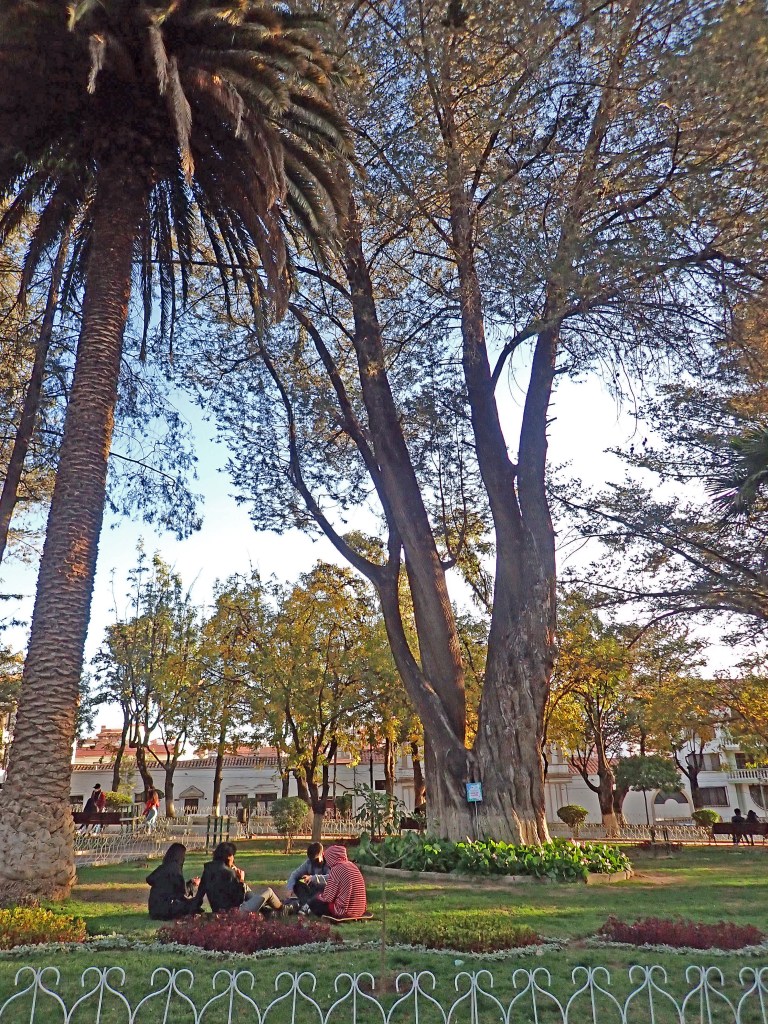
For example, the tree in the background above, which may be a cypress, is more than 100 feet tall, with a basal circumference of about thirty feet. On the basis of the park’s time line I estimate it to be about 130 years old, not particularly old as trees go. Obviously it has been well cared for, but a more fundamental question is how any tree could be so big in a place where there are few if any large trees? Other than jungle giants in the Amazonian region, Bolivia has few large trees, and almost no large trees native to the highlands. Having no other explanation, I credit Clotilda along with a blessing from the Pope.
The place was packed with people, all of whom were having fun and behaving in a civilized manner.

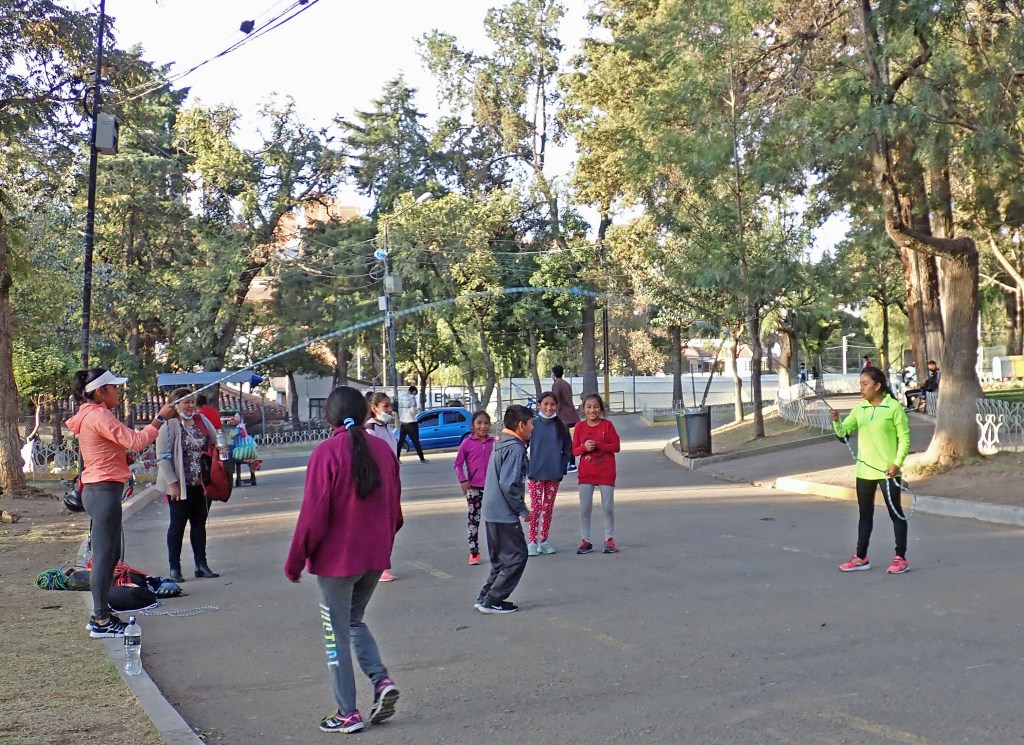
Dancers danced while children played jump rope.
At the far end of the park I discovered a most unusual phenomenon, an entire section devoted to smooching!
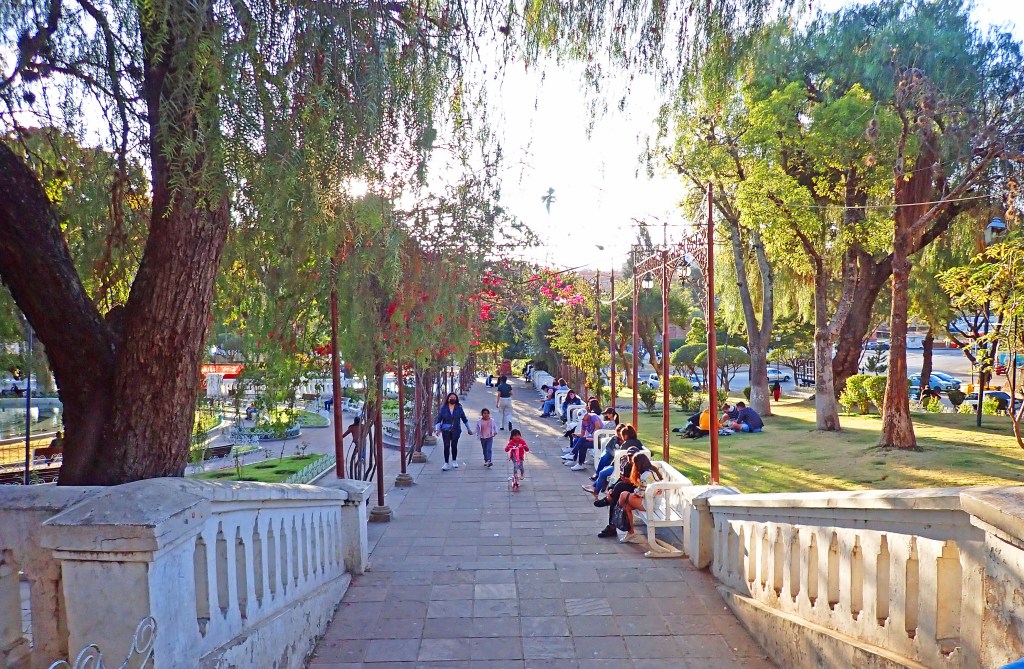
It may not be apparent in the photo above, but almost all the seated people were teenagers passionately kissing and petting. It’s OK because it was all happening in the public view. In the States we sequester such activities. As a result teen pregnancies are common here, but in Bolivia they wisely recognize that the best way to prevent teenagers from going too far is to make them do what they do in public. It would only be a scandal if a teenage couple were found to be smooching in private!
There were pretendians such as the hipster below.
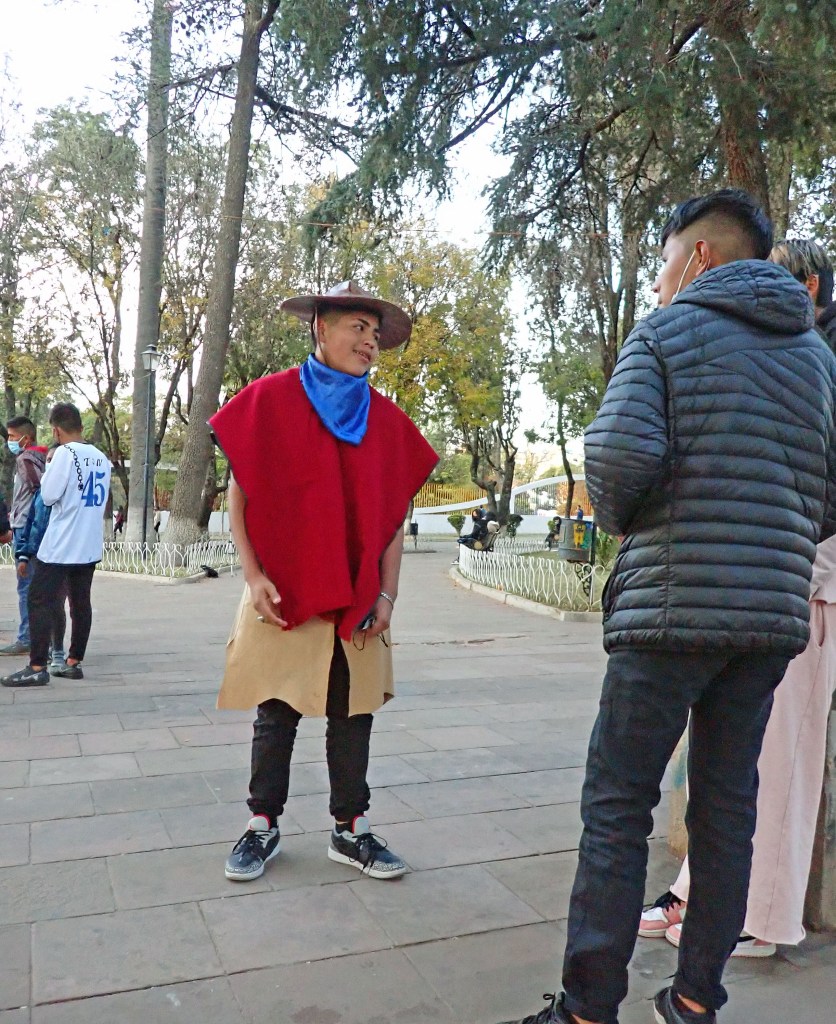
But few actual Indians such as these folks.
Our visit to Sucre was a lovely interlude, but we had places to go and few ways to get there. We wanted to visit the Amazonian lowlands in the north of Bolivia, but to get there by ground transportation would have been a grueling journey, so we elected to fly back to Cochabamba, and from there fly to the de facto capital La Paz. I was reluctant to visit La Paz, for I loathe cold air and big cities, but Ann, who had been there before, assured me that wonders awaited.
……………………………………….
We landed in El Alto at 13,325 ft, the highest international airport in the world. The air was thin and crisp. It was fortunate that we were already somewhat acclimated to altitude, otherwise we might have fallen over dead.
El Alto is perched on the edge of the altiplano. The view is superb. It overlooks a vast bowl that contains the city of La Paz. Towering over all is the magnificent snow covered peak of Illimani at 21,102 ft.

El Alto was once considered a suburban slum on the outskirts of town, fit only for impoverished Aymara Indians, but it has now grown to such an extent that its population exceeds that of La Paz.
Like many Latin American cities the growth was unplanned, and little provision was made for transportation. Few people own cars, and the narrow roads that connect the two cities are extremely steep. Crowded busses can barely make the 1300 foot climb, and taxies are prohibitively expensive. How then could a poor peasant get from El Alto to the big city and back?
In 2012 President Evo Morales, my favorite Commie, stepped up to the plate and announced an audacious plan. Without kowtowing to international lenders he proposed to build “Mi Teleférico“, a cable car system that would transport people to every corner of the metropolitan area by means of multicolored glass bubbles floating high in the sky, a futuristic dream for one of the most traditional societies on earth. I could hardly believe my eyes!

We boarded a bright red bubble and began our descent into the abyss. We were at least 800 feet in the sky!
The bubbles may look multicolored from the outside, but they are built of sparkling clean transparent glass that affords an unobstructed view in all directions. Only ten passengers are allowed per bubble, and the bubbles float away in perfect silence every twelve seconds for 17 hours each day. The ride is so quiet and smooth that it seems like a dream.
In the photo above there are many bubbles of various colors (each line has a designated color), but they are impossible to see because of the vast scale. Wherever you are Illimani overlooks the scene like a powerful but benevolent deity second only to Pachamama herself. The beneficence must be working because there has yet to be a single fatality!
The cost per person per line is $0.40, a bit steep for a poor peasant. We, on the other hand, are rich Gringos (I can’t bear to call myself a Yankee); so, we decided to splurge and buy unlimited tickets for $3 per person that enabled us to access every corner of the city for a full day. By switching to the blue line we soon arrived at the lowermost station, the blue building seen below. You can be sure that our ears were popping!
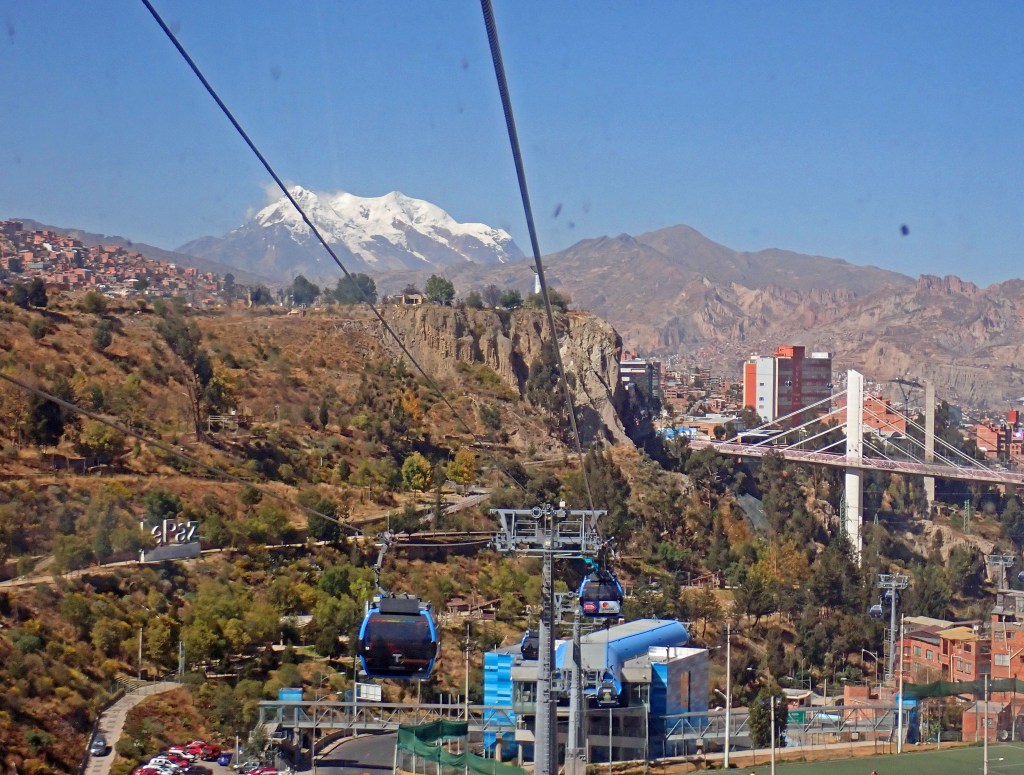
But where does this marvel of modernity take you ? Into the heart of an ancient world little changed by time, a place where “glamour” can be found directly opposite a shop selling aborted llama fetuses.

You want good luck? An aborted llama fetus is the answer! “They can be burnt as an offering to Pachamama, buried under the foundations of the house, or left by a front door”. Pay a little extra for a magic spell and you will be assured of health, wealth, and luck in love!
Wait a minute! I see a shriveled pig, desiccated dogs, and a perfectly good dead llama. Only the black mummies are legitimate aborted fetuses. What a ripoff! They can get away with bait and switch because this is the famous Witch’s market, a place much frequented by tourists. If you don’t want a fetus, no problem, there is so much more for sale!
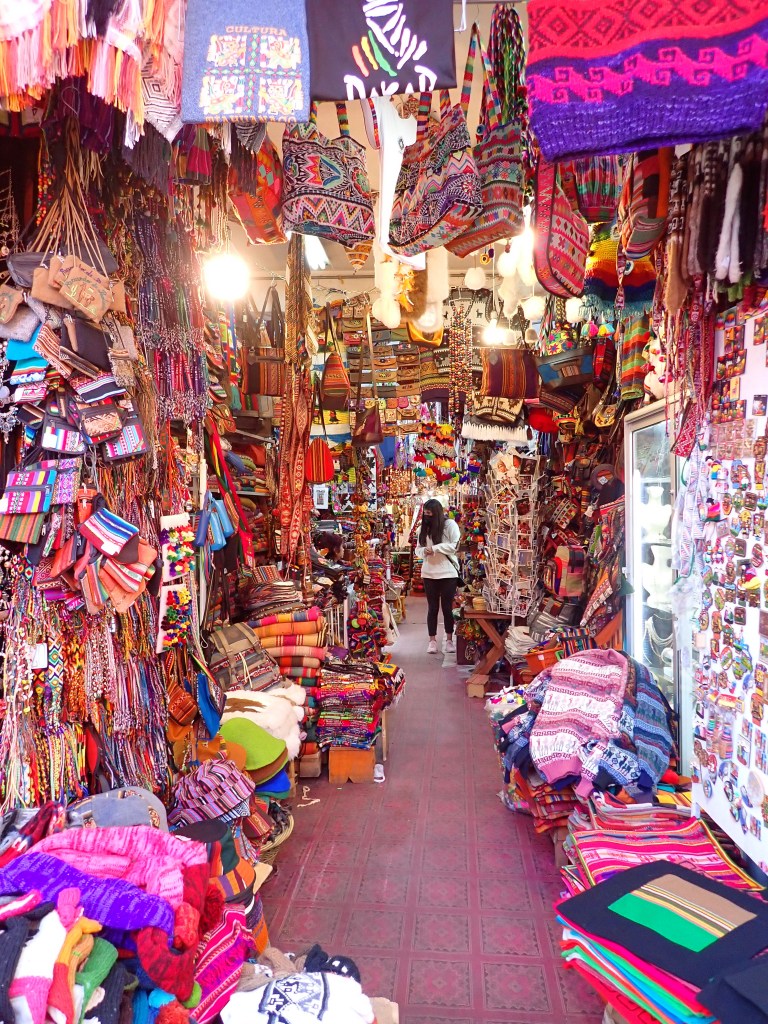
My ears were cold, in fact all of me was cold, so I bought a hat, gloves, and an alpaca scarf, then sat down with a steaming cup of coca tea! As previously mentioned, coca, but not cocaine, is perfectly legal and helps one adjust to altitude.
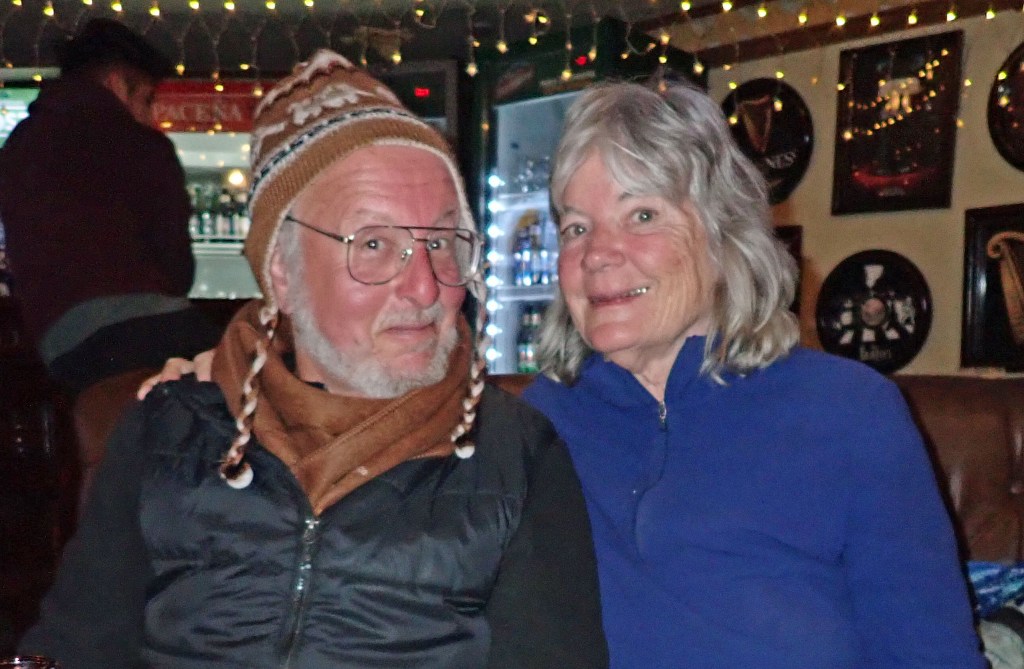
In my opinion, the best way to adjust to insufferable altitude and cold dry air is to go somewhere else, someplace warm and juicy like the jungle.
So it was that we caught the next weekly flight to Rurrenabaque, a weird little town filled with off duty Israeli soldiers hoping to reenact the peregrinations of the legendary Wandering Jew. Stay tuned!
 Weazelwise